Everything a Georgia homeowner should know before hiring garage-door help: who's required to hold a license, how to verify one, what the codes say, and which local pages cover your city. One call connects you with an independent local pro: (888) 830-7442.

Georgia licenses residential and general contractors through the State Licensing Board for Residential and Commercial General Contractors, and a state license is generally required for construction contracting valued at $2,500 or more. However, Georgia law (O.C.G.A. 43-41-17) exempts specialty contractors who perform only limited, specific trade work, and the board's Traditional Specialty Contractors policy statements list overhead doors, sliding and coiling doors, and automatic doors among the exempt specialties. In practice, a company that only installs and repairs garage doors does not need a Georgia state contractor license, though it must still comply with all applicable building codes, hold any local occupational tax certificate (business license) its city or county requires, and pull permits where mandated. If a garage door project is part of a larger remodel โ for example structural changes to the garage โ the contractor running that broader job needs a state residential contractor license. Homeowners can confirm whether a company holds a state license through the Secretary of State's search tool.
Verify before you hire: Georgia Secretary of State Licensee Search. It takes a minute, it's free, and it's the single strongest scam filter available to a homeowner.
Permit practice varies by Georgia jurisdiction. A straightforward like-for-like garage door replacement is often treated as exempt repair work in many inland counties, while structural changes to the opening, header work, or converting a garage generally require a building permit. Coastal jurisdictions are stricter because replacement doors must meet wind-load provisions of the state minimum codes. Homeowners should check with their county or municipal building department, since local amendments differ across the state.
Georgia's State Minimum Standard Codes are based on the International Residential Code, and coastal counties such as Chatham, Bryan, Liberty, McIntosh, Glynn, and Camden sit in elevated design wind speed zones. Garage doors installed there must meet the design-pressure requirements for the site's wind speed and exposure category, documented by the manufacturer's label. With the 2024 IRC taking effect statewide January 1, 2026, coastal homeowners replacing a door should confirm the new door's wind rating with their local building official.
Most of Georgia faces a humid subtropical climate, so the dominant long-term threat to garage door hardware is moisture-driven corrosion: springs, cables, bottom brackets, and fasteners rust faster in persistent humidity, and coastal salt air sharply accelerates the process near Savannah, Brunswick, and the barrier islands. Summer heat also degrades opener electronics and dries out rollers and weather seals. Severe thunderstorms and occasional tropical systems bring wind exposure along the coast and in south Georgia, while short winter cold snaps can trigger spring failures on aging doors in north Georgia.
Salt air and humidity work on Georgia garage hardware year-round: cables fray from the inside, springs pit, and fasteners seize. Coastal homes here earn their reputation for eating hardware โ stainless and coated options exist for a reason.
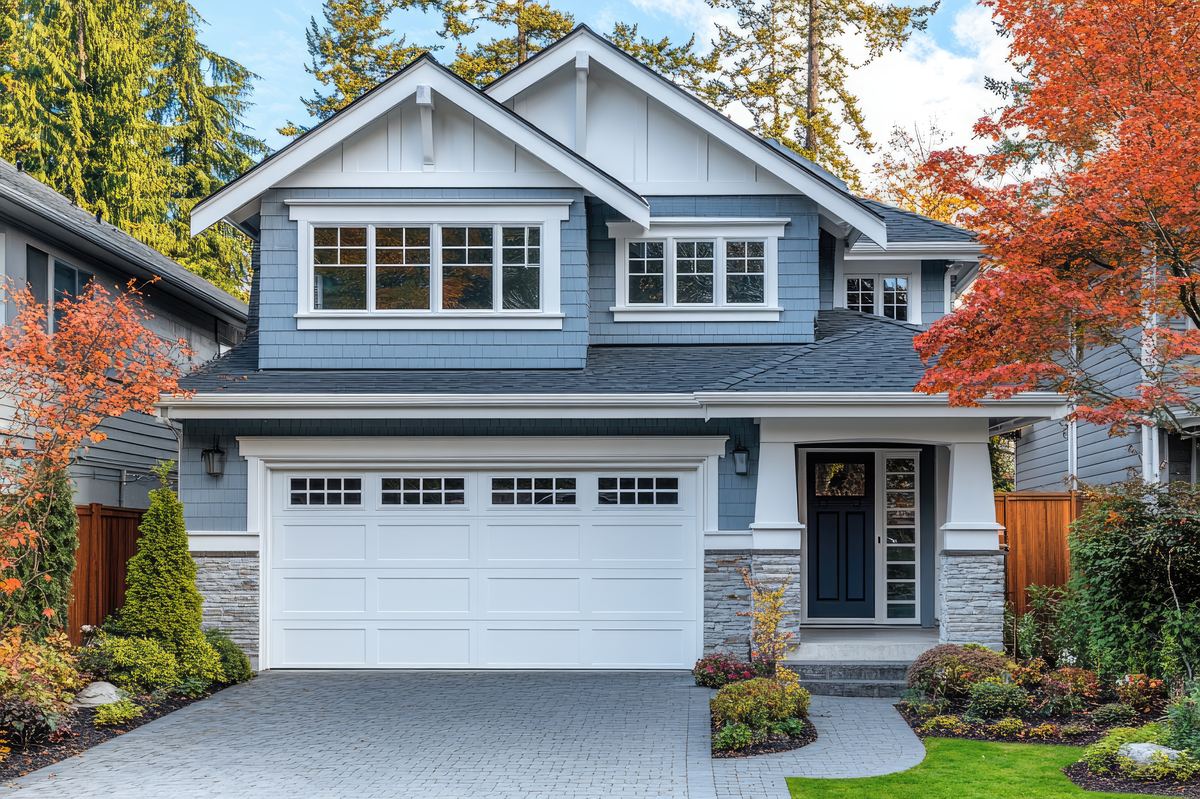
There's a federal safety standard bolted to the ceiling of nearly every Georgia garage. Since January 1, 1993, every residential opener sold in the U.S. must reverse automatically on contact with an obstruction โ entrapment protection required by UL 325 and 16 CFR Part 1211, standards written after documented child entrapment deaths.
Verify it in under a minute: interrupt the sensor beam mid-close (it should reverse), then the lumber test on the floor (contact must reverse it). Failing either puts the door outside a federal standard written after documented tragedies โ and a local pro can bring it current, often the same day.
Sources: U.S. Consumer Product Safety Commission ยท UL Standards & Engagement ยท 16 CFR Part 1211 ยท DASMA
This industry's fake-storefront problem is real enough that search engines purge garage-door listings in waves. Five minutes of checking beats a driveway dispute every time.
Start with Georgia Secretary of State Licensee Search. In a state without a blanket requirement, check whether your municipality requires local registration โ and treat voluntary credentials as a good-faith signal. Ask for the number over the phone; legitimate companies volunteer it.
Parts named, labor separated, warranty terms in writing โ before work begins. The signature scam in this trade is the advertised teaser fee that balloons on the driveway; a written quote is its natural enemy.
General liability and workers' comp protect you if a spring job goes wrong on your property. Reviews can be manufactured; certificates of insurance are harder to fake and any established Georgia outfit can produce one.
Fake garage-door listings borrow retail addresses and virtual offices. Map the address you're given. A service-area business with no storefront can still be legitimate โ but it should say so plainly rather than borrowing someone else's building.
Deposits are normal for custom doors; full prepayment for a repair is not. Standard practice in Georgia is payment on completion โ and a pro confident in their work has no reason to ask otherwise.
Every call type routes to an independent local professional โ ordered here by what Georgia's climate actually breaks first.
Cables fray strand by strand until they don't. Catching them early is cheap insurance.
Learn more โWeatherproofingDaylight under the door means weather, dust, and pests have a standing invitation.
Learn more โMoney callThat bang from the garage? Spring steel reaching the end of its cycle rating. Pro territory, always.
Learn more โOpenersHums, clicks, half-lifts: opener symptoms decode fast under a trained eye.
Learn more โOff-trackRollers out of the rail means stop โ using the door now turns a repair into a rebuild.
Learn more โPanelsDents, cracks, and rot handled section by section where the model allows.
Learn more โBig ticketFrom builder-grade steel to carriage-house statement doors โ installed to spec.
Learn more โ24/7A door that won't close is an open invitation. Emergency routing exists for exactly this.
Learn more โCommercialService counters, firehouses, warehouses โ commercial doors earn their keep daily.
Learn more โTune-upTwenty minutes a year keeps the thousand-cycle machine honest.
Learn more โSmartBattery backup, camera models, keypads โ the garage joins the smart home properly.
Learn more โStorm-ratedMiami-Dade approvals and wind-load labels are real engineering, not marketing.
Learn more โIn our 39-state Garage Door Failure Risk Index, Georgia ranks #27 of 39 with an index score of 36.2. The median Georgia home was built in 1993, after the 1993 federal entrapment standard took effect, which spares this state the worst of the legacy-opener problem. About 66.1% of occupied homes are owner-occupied โ and owners, not landlords, make the maintenance decisions that keep doors alive.
Coastal air sets the Georgia maintenance rhythm: salt and humidity work on springs, cables, and fasteners every month of the year, so the calendar here is less seasonal than continuous. Twice-a-year lubrication with a marine-grade product beats the annual habit inland homeowners get away with. Watch cables especially โ corrosion frays them from the inside where it's hardest to see. When replacement time comes, coated hardware and stainless options cost more up front and repay it in years of service.
The biggest Georgia markets we cover, with the full city list below. Each page carries local housing data, the free checks, and direct routing to a pro serving that area.
| City | Covered population | Median home built | ZIPs |
|---|---|---|---|
| Atlanta | 1,038,385 | 1983 | 92 |
| Marietta | 329,774 | 1984 | 14 |
| Lawrenceville | 275,774 | 1994 | 6 |
| Savannah | 239,015 | 1976 | 12 |
| Alpharetta | 195,832 | 1998 | 5 |
| Cumming | 191,371 | 2005 | 3 |
| Decatur | 169,950 | 1978 | 8 |
| Gainesville | 136,747 | 1993 | 5 |
| Athens | 130,330 | 1987 | 10 |
| Stone Mountain | 129,790 | 1982 | 4 |
| Duluth | 116,684 | 1995 | 5 |
| Buford | 113,957 | 2002 | 3 |
Georgia licenses residential and general contractors through the State Licensing Board for Residential and Commercial General Contractors, and a state license is generally required for construction contracting valued at $2,500 or more. Use the official lookup to verify before hiring.
Use Georgia Secretary of State Licensee Search โ the official lookup. A legitimate company will volunteer its credential number; hesitation is an answer too.
Permit practice varies by Georgia jurisdiction. A straightforward like-for-like garage door replacement is often treated as exempt repair work in many inland counties, while structural changes to the opening, header work, or converting a garage generally require a building permit. Coastal jurisdictions are stricter because replacement doors must meet wind-load provisions of the state minimum codes. Homeowners should check with their county or municipal building department, since local amendments differ across the state.
Salt air and humidity work on Georgia garage hardware year-round: cables fray from the inside, springs pit, and fasteners seize. Coastal homes here earn their reputation for eating hardware โ stainless and coated options exist for a reason.
Talk to a local garage-door pro now. Free to call, no obligation, honest answers โ the way it should be.