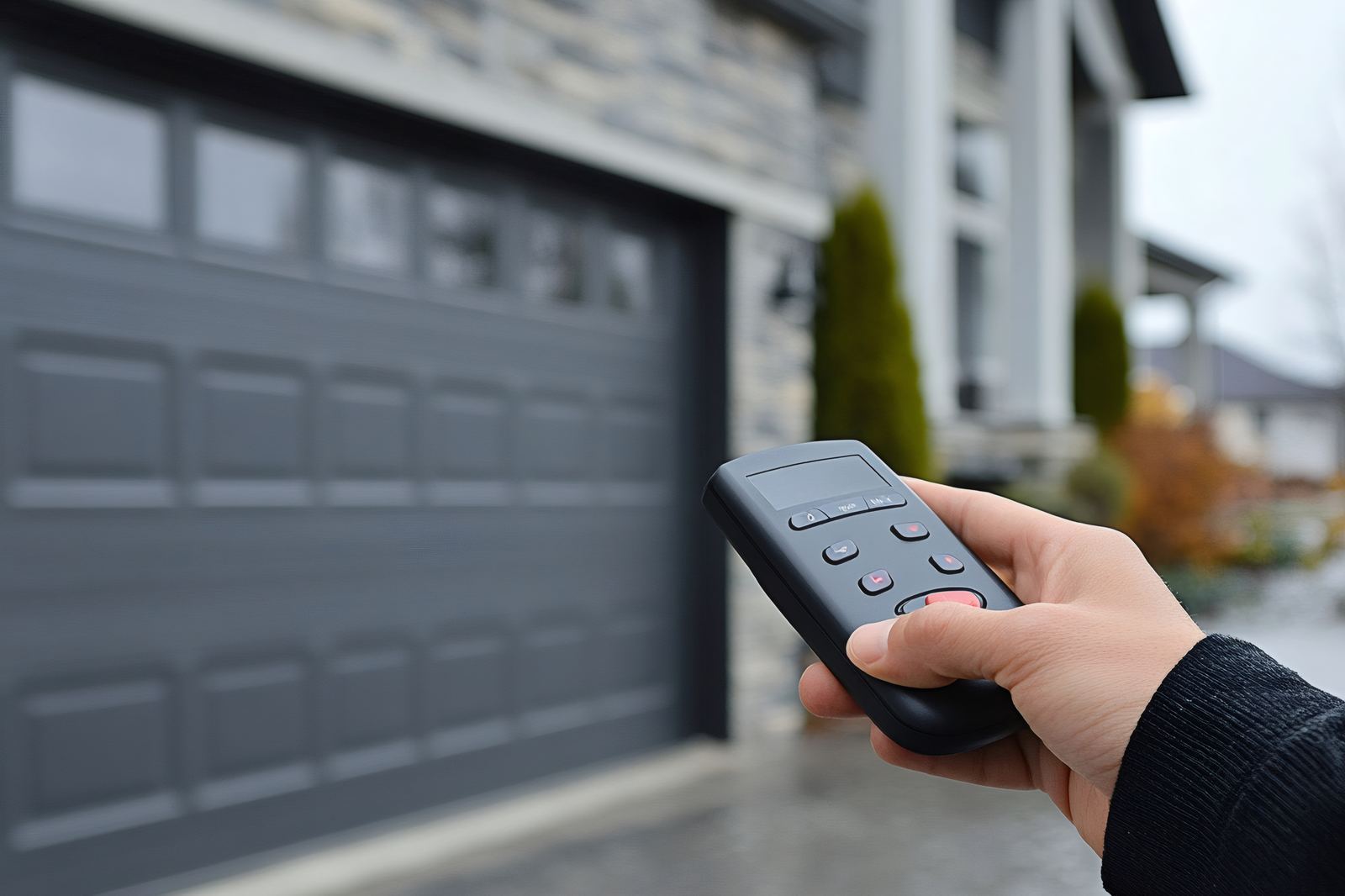
What does a smart garage door opener actually do?
Strip the marketing and the substance is real. A connected opener joins your home WiFi and reports to an app: open or closed status at a glance, push alerts the moment the door operates, remote open and close from anywhere with a data signal, and an activity log showing every operation with its time and source. The practical wins stack up fast — closing the door you forgot from the office, letting a family member in without circulating remotes, opening for a contractor and watching the log to confirm they left, and scheduled reminders or auto-close rules for doors left open past a set time. Integrations extend it: major openers tie into the mainstream smart-home platforms for routines and voice status, and some participate in in-garage package delivery programs that let vetted couriers place parcels inside the door rather than on the porch. One honest boundary to know: safety standards require that a door closed remotely — commanded by someone who cannot see it — provide audible and visual warning before it moves, which is why smart-commanded closes beep and flash first. That is the system working as designed, not a defect to disable.
New smart opener or a retrofit kit on my current one?
Both are legitimate paths, and the right one depends on the machine hanging from your ceiling. Retrofit controllers — small hubs that pair with your existing opener, plus a door-position sensor — add app control, alerts, and remote close to an opener you already own, at the cost and disruption of a small-electronics install rather than a machine swap. They suit openers that are mechanically healthy, reasonably modern, and equipped with the photo-eye safety sensors required on units made since the early 1990s. The honest caveats: compatibility is opener-by-opener — certain openers with newer rolling-code radio systems work only with their manufacturer's own hub, and some brands are not supported at all — so checking your opener's brand, model, and manufacture year against the kit's compatibility list is step one, not an afterthought. A new smart opener wins when the existing unit is old, loud, straining, or pre-safety-standard: you get native WiFi without an add-on box, plus the generational upgrades — quieter belt or wall-mounted jackshaft drives, battery backup, brighter LED lighting, and current security radio. The rule of thumb we give callers: retrofit a healthy opener, replace a tired one, and never retrofit a unit without working safety sensors.
What is the California battery backup law?
California Senate Bill 969, in force since July 2019, requires that automatic residential garage door openers sold or installed in the state include a battery backup that operates the door during a power outage. The law was written in the aftermath of deadly wildfires in which residents — disproportionately older residents — were trapped when power failed and they could not open heavy garage doors by hand to evacuate their vehicles. The requirement applies to newly sold and installed openers, including replacement units; it does not force the retirement of existing openers, but it does mean that in California, a compliant installation includes battery backup, full stop, and an installer proposing otherwise is proposing a violation. Beyond compliance, the feature earns its keep anywhere: a backup battery gives you a meaningful number of door cycles during an outage — enough to get vehicles out and the household moving — exactly when storms, fires, or grid failures make the garage door matter most. Batteries are consumable, typically serving a few years before replacement, and good openers chirp or alert when the battery needs attention. Outside California, backup is optional but, in our honest opinion, one of the most defensible options on the sheet.
What about keypads, remotes, and security?
Accessories are where a smart installation gets tailored to a household. Wireless keypads mount outside the door frame and open the door with a PIN — the workhorse solution for kids coming home from school, and most modern keypads support temporary or secondary PINs for guests and workers that you can change afterward, which beats loaning out remotes. In-car systems built into vehicle mirrors and consoles can be programmed to modern openers, and universal remotes cover mixed-brand households. On security, the facts are reassuring if your equipment is current: openers have used rolling-code radio for decades — the code changes with every press, defeating the code-grabbing replay attacks that plagued early fixed-code openers — and current systems add encrypted protocols on top. The honest vulnerabilities are mundane: an old fixed-code opener from the pre-rolling-code era, which deserves replacement on security grounds alone; a visor remote clipped in a car parked in the driveway, which is a house key left outside; and the emergency release cord, which sound installation practice positions and, where appropriate, shields against fishing attempts through the top of the door. A good installer addresses all three while setting up the electronics, and walks you through vacation lockout and manual lock options before leaving.
What does professional smart opener installation involve?
More than hanging a motor, which is why the professional visit earns its place even for a gadget-comfortable homeowner. The installation starts where every opener job should: with the door itself. The technician verifies balance with the door disconnected, because a smart opener straining against a poorly sprung door fails just like a dumb one, and no app fixes physics. Then the mechanical install — mounting the unit or wall-mount jackshaft, rail and trolley assembly on trolley-style units, connecting the door arm — followed by the safety-critical setup: photo-eyes mounted near the floor, aligned, and tested; travel limits set so the door seals without slamming; force settings adjusted and the contact-reversal test performed. The smart layer comes last: joining the opener to your WiFi (checking that signal actually reaches the garage, a surprisingly common failure point, sometimes solved with an extender), app account and household member setup, keypad and remote pairing, battery backup installed and verified, and integrations connected to your platforms. A thorough installer finishes with a walkthrough — app, manual release, safety tests, battery behavior — and hauls away the old opener. Expect the full visit to run a few hours for a replacement, less for a retrofit hub.