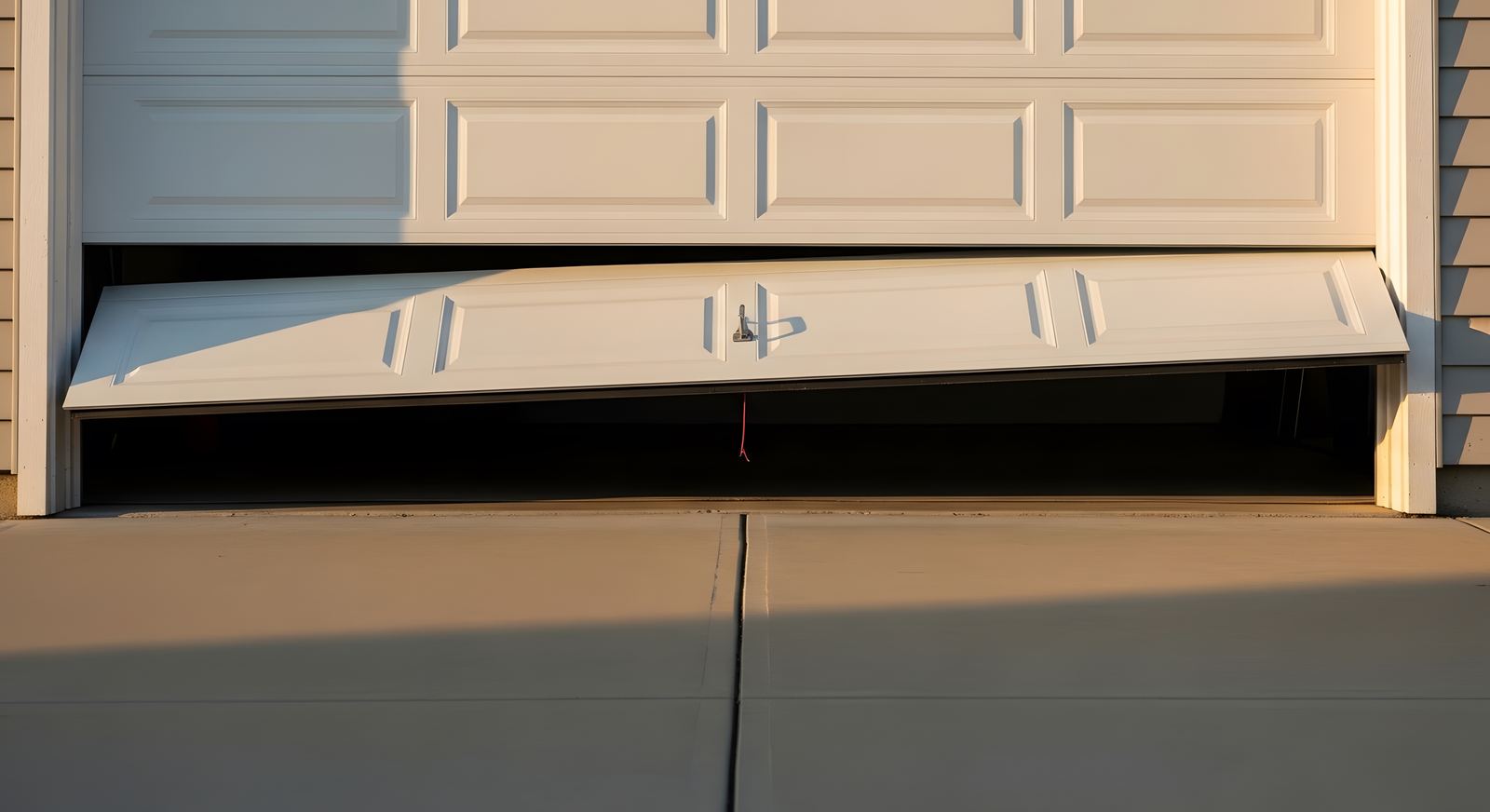
What makes a garage door jump its track?
Almost every off-track door traces to one of a few root causes. Impact leads the list — a car bumper nudging the door or the vertical track, even gently, can flex the track enough for rollers to escape on the next cycle. Broken or slipped lift cables are next: when one cable fails, the spring keeps pulling on the other side, the door racks diagonally, and rollers lever out of the rails. Worn rollers contribute quietly; a roller with a shattered tread or collapsed bearing can hop the track lip under load. Loose track hardware lets the rails drift out of alignment over years of vibration until the gap is wrong somewhere along the travel. Finally, obstruction strikes — a shovel handle, a trash bin lid, a charging cable dangling into the opening — stop one side of the door while the opener keeps pushing the other. Whatever the trigger, the mechanics are the same: the door only travels straight when both sides move in lockstep, and anything that breaks that symmetry starts levering rollers out of the rails.
Why does forcing the door make everything worse?
It is the most natural instinct and the most expensive one. When a door sits crooked, its weight is concentrated on the few rollers still captured in the track and on whatever the jammed section is wedged against. Pressing the opener button again drives the trolley forward against that jam: the motor is strong enough to fold the top panel around the trolley arm, strip its own drive gear, or rip more rollers out of the rails — converting a track-and-roller repair into a panel replacement plus an opener repair. Prying at the door by hand is worse for a different reason: you may be the only thing holding it. Dislodging the wedge that is accidentally supporting the door can bring several hundred pounds down at once, and if a cable has snapped, spring tension is still live in the system and unpredictable. The safe sequence is short: stop, unplug the opener so nobody in the household cycles it by remote, keep people and vehicles clear of the opening, and leave the door exactly as it sits until a professional arrives.
Is an off-track door dangerous to leave overnight?
It depends on how it is hanging, and honesty requires both halves of the answer. A door that has settled firmly — resting on the floor or solidly wedged with no visible movement — is generally stable enough to wait for a regular-hours appointment if you keep the opener unplugged and the area clear. That patience saves the after-hours premium. But three situations justify an emergency call: a door stuck partly or fully open, which is a security and weather problem all night long; a door hanging with visible daylight under one side or any tendency to shift, creak, or settle when touched, which means it is still looking for somewhere to fall; and any off-track door where children, pets, or anyone else cannot reliably be kept away from the opening. If the garage connects to the house, lock the interior door regardless. A good dispatcher — including ours — will ask exactly these questions before routing you, because sending a midnight truck to a door that could safely wait until morning is the kind of upsell we exist to refuse.
How does a professional put a door back on track?
The repair is more surgical than muscular. The technician first makes the door safe: securing it with clamps or vise grips on the track, supporting the free corner, and — if a cable has failed or slipped — releasing spring tension so the system is inert before anything moves. Only then does the actual re-tracking happen, walking the door back into alignment and guiding rollers into the rails, panel by panel, rather than heaving the whole assembly at once. Next comes root cause, because a door never leaves its track without a reason: cables are inspected and re-seated on their drums or replaced in pairs, damaged rollers swapped, bent track straightened or replaced in sections, loose lag screws and brackets re-anchored, and hinges checked for cracks from the racking. The door is then run by hand through its full travel, balance is verified with the opener disconnected, and finally the opener is reconnected with its force and limit settings re-checked — settings that may have masked the developing problem in the first place. Skipping the root-cause step is how the same door ends up crooked again within the month.
How do I keep it from happening again?
Off-track failures are among the most preventable problems in the trade, because the causes announce themselves early. Watch for the precursors: a door that shudders, hesitates at the same spot, or sounds different on one side; cables showing fray, rust, or slack; rollers that wobble, grind, or have visibly cracked treads; and track with shiny rub marks where a roller is scraping instead of rolling. Any of those is a cheap scheduled visit instead of a future emergency. Practical habits help too. Give the door a full, clear opening — bikes, ladders, and bin lids that creep into the doorway are classic obstruction strikes. Pull far enough into or out of the garage that a bumper never rests near the door or vertical track. Test the opener's auto-reverse periodically so an obstruction produces a polite retreat rather than a crumpled panel. And an annual professional tune-up covers the rest: tightening track hardware, checking cable seating on the drums, and confirming door balance — the three quiet maintenance items that, left alone for years, produce most off-track calls.