🔧 Fix-It Guide · free checks first
Why Is My Garage Door Slow, Jerky, or Shuddering?
Honest diagnosis, free checks first, and a straight answer about when it's a pro job. No teaser fees, no scare tactics — that's the whole point of this site.
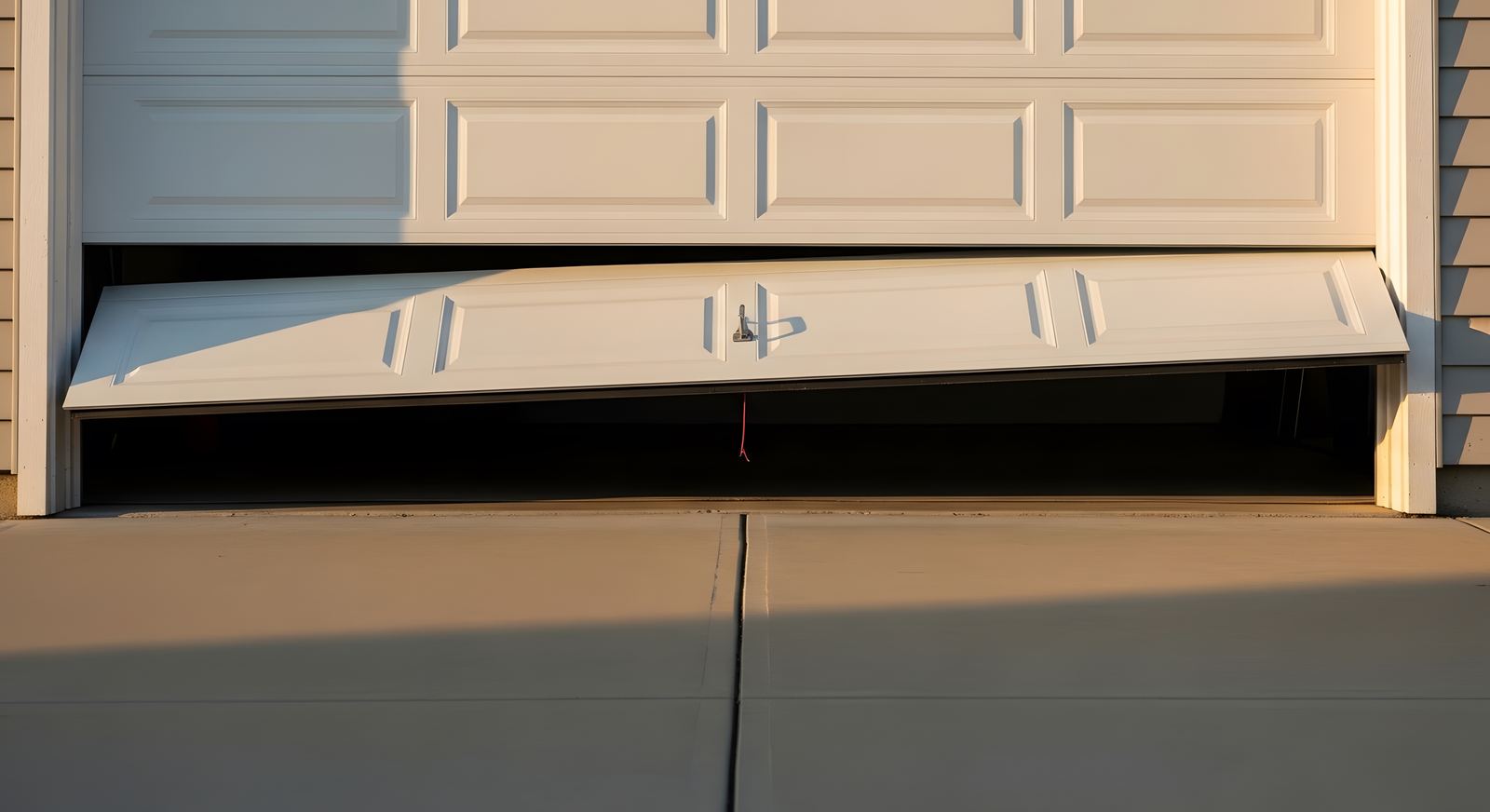
Honest diagnosis, free checks first, and a straight answer about when it's a pro job. No teaser fees, no scare tactics — that's the whole point of this site.
Close the door, pull the red release cord, and move the door by hand through full travel. Note whether it is light and smooth (opener-side problem), heavy or sinking when released at halfway (spring fatigue — pro work), or catchy at specific heights (friction or damage there). Reconnect by running the opener once. This one test directs everything that follows.
Apply garage-door silicone or white lithium to every roller bearing, hinge pin, the spring coil, shaft end-bearings, and the opener rail; lightly oil a chain, or use screw-drive rail grease if applicable. Wipe the tracks clean and dry rather than greasing them. Cycle the door several times. Most jerky doors smooth out substantially right here.
With the door closed, examine each roller for wobble, flat spots, cracks, and skidding instead of spinning, and each hinge for cracks and loose bolts — snug them gently. Sight down both tracks for dents and debris at the heights where the door hitches. Leave bottom rollers and anything attached to cables strictly alone; those are under lift-cable tension.
Unplug the opener, then look for white plastic shavings inside or below the powerhead (worn drive gear), check chain sag at mid-rail against your manual's spec, and confirm the rail is lubricated where the trolley slides. Plug back in, run a cycle, and count any diagnostic LED flashes at the motor head — note the pattern for your manual or your technician.
Separate two different stories that look alike from the driveway. A uniformly slow door — steady speed, no shudder, just leisurely — may simply be running at its design pace: openers move roughly six to eight inches per second, taking twelve to fifteen seconds on a typical seven-foot door, and belt or chain drives vary; some models even offer a speed setting, and doors always close slower than they open by design for safety. If the pace never changed, nothing is wrong. A struggling door is different: it starts quick then labors mid-travel, shudders or hitches at repeatable spots, pauses and lurches, or takes visibly longer than it did last season. That pattern means something is resisting — friction, weight, or a slipping drive. Your ears help too: laboring usually brings new noise (grinding, chattering, motor strain). The definitive sort is the hand-lift test described below, which tells you in thirty seconds whether the resistance lives in the door hardware or the opener. Diagnose the struggle; leave the merely unhurried door in peace.
This is the single most informative free diagnostic in the garage-door world. Close the door fully, pull the red emergency release cord to disconnect the opener, and operate the door by hand through its whole travel, slowly, feeling everything. Three findings, three verdicts. Finding one: the door glides light and smooth by hand — then the door hardware and springs are healthy, and your slowness or jerkiness comes from the opener side: a worn drive gear, a stretched or mis-tensioned chain, a dry rail, a tired motor or capacitor. Finding two: the door moves but feels heavy, and if you lift it halfway and let go carefully it sinks rather than holding position — the springs have lost tension, the opener has been hauling extra effective weight, and spring adjustment or replacement (professional work, always) is the real fix. Finding three: the door catches, scrapes, or hitches at specific heights — friction or damage in rollers, hinges, or track at those spots, which lubrication and inspection will localize. Reconnect the trolley afterward by running the opener once. Whatever you found, you now know which half of the system to work on.
Friction is the leading cause of jerky travel, and a proper lubrication pass fixes it more often than any part. Every roller turns on a small bearing; every hinge pivots on a pin; the spring's coils rub each other as they wind; the opener trolley slides its rail. Dry, all of them drag — and drag is uneven, which is exactly why the symptom is jerking rather than smooth slowness. Use a garage-door-rated silicone spray or white lithium grease, not classic penetrating oil, which strips lubricant and gathers grit. Apply to each roller's bearing hub (not the wheel tread), every hinge pin, the torsion spring coil along its length, the bearings at each end of the torsion shaft, and the opener rail where the trolley rides; chain-drive owners give the chain a light coat, screw-drive owners use their manual's specified rail grease. Leave the track channels clean and dry — wipe them with a rag, since greased tracks collect grit into an abrasive paste. Cycle the door several times to distribute. Twice a year keeps most doors gliding; doing it after the hand-lift test tells you immediately how much of your problem was just thirst.
Springs lose strength gradually across their roughly 10,000-cycle rated life, and a door with fading springs gets effectively heavier month by month without ever announcing a failure. The opener compensates silently until it cannot: travel slows, the motor labors audibly, movement turns jerky as the drive slips under load, and cold mornings — when steel is stiffest — are worst. The balance test diagnoses it: with the opener disconnected and the door at halfway, a properly sprung door floats in place; a tired-spring door sinks steadily. Confirm at the one-quarter and three-quarter positions too, since wear can show unevenly. If the door sinks, the honest path is professional spring adjustment or replacement — winding tension into springs is the same hazardous procedure as replacing them, with the same CPSC-documented injury history, and it is never a DIY task on this site's advice. What not to do: crank the opener's force setting up to bully through the weight. That masks the symptom, accelerates gear and motor wear, and — the part that matters — degrades the force-sensing safety margin that reverses the door off a person or pet.
If the hand-lift test cleared the door, examine the machine. The nylon main drive gear in many chain-drive openers wears with age and slips under load before it strips entirely — the door hesitates and lurches while the motor runs steadily, and fine white shavings inside or below the powerhead confirm it; a gear kit is a routine, inexpensive professional fix. A stretched chain sags and snatches, producing rhythmic jerks — adjustable at the trolley per your manual, snug but never taut. On screw-drive units, a dry rail makes travel loud and lurchy until the correct grease goes on. Motor-side causes include a weakening start capacitor (slow, reluctant starts, sometimes a hum before movement) and, on older units, a motor past its prime; both are testable and replaceable by a tech. Electronic causes exist too: some openers reduce speed near travel limits by design, and a failing RPM sensor or logic board produces stutter with diagnostic blink codes at the motor head — count any flashes and note them. An opener that is slow, hot, and struggling on a healthy, balanced door is also allowed to simply be old; fifteen-plus years is a full career.
Very often, yes, and the physics is straightforward. Cold thickens whatever grease remains in roller and shaft bearings, stiffens hinge pivots, makes the vinyl bottom seal and weatherstripping rigid enough to drag along the jambs, and slightly reduces spring steel's resilience so the counterbalance delivers a little less help exactly when friction demands more. The combined effect: a door that glided in September labors and stutters in January, worst on the first cycle of a frosty morning and better by afternoon. The free remedy stack: a fresh lubrication pass with cold-rated silicone spray (silicone stays effective at lower temperatures than heavy greases); wiping the weatherstripping and applying a silicone wipe so the door does not peel itself off frozen seals; and checking that the door is not literally freezing to the slab after wet nights — break ice bonds by hand, never with the opener. If winter slowness persists after lubrication, run the opener's travel and force relearn during cold weather so its baseline matches winter reality, and consider that bearings which only complain in the cold are bearings nearing retirement — an inexpensive roller upgrade fixes that permanently.
Mostly no — travel speed is set by the drive design, and openers deliberately close at a modest pace for safety. A few newer models offer a faster-open setting via their controls or app, worth checking your manual for. But if your door used to be faster and slowed down, that is friction or spring fatigue, not a setting, and fixing the cause restores the original pace.
The first foot of travel is where the opener breaks the door free of the floor seal and the springs take up load, so marginal problems show there first: a seal sticking to the slab, slack in a stretched chain snapping taut, a worn gear slipping under peak load, or tired springs providing less initial help. Lubricate, check chain tension, and run the balance test.
Around twelve to fifteen seconds for a standard seven-foot door — openers travel roughly six to eight inches per second, with belt drives similar to chains and closing intentionally no faster. If yours takes noticeably longer than it did a year ago, the change is the finding: something added friction or weight, and the hand-lift test will tell you where it lives.
Yes, cumulatively. Every hitch loads the drive gear, chain, and motor with shock instead of steady work, and worn nylon gears and stretched chains are the usual casualties. The opener is also masking the real problem — friction or fading springs — while it wears. A lubrication pass and balance test now routinely prevents a gear kit or motor visit later.
Talk to a local garage-door pro now. Free to call, no obligation, honest answers — the way it should be.